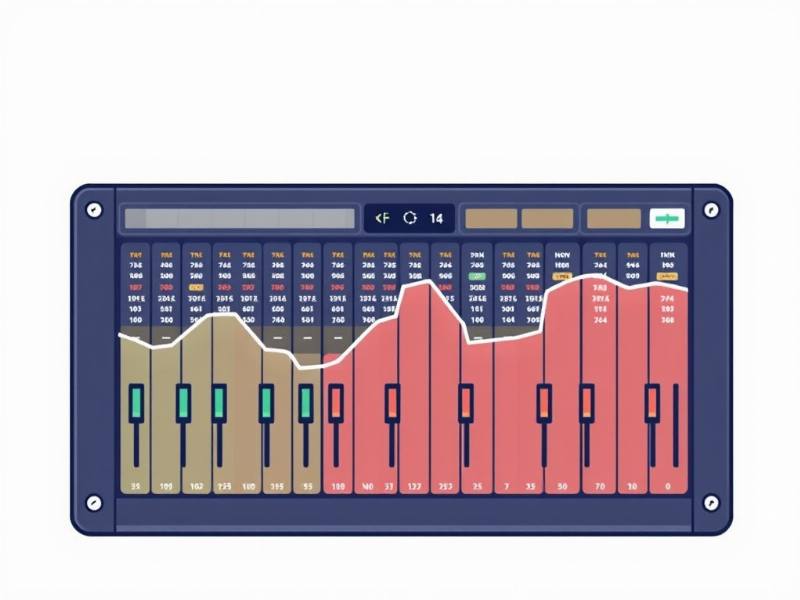
The Metadata Minimization Mixer: Enhancing Efficiency in BTCEnergy Environments

In the rapidly evolving landscape of Tumbler infrastructure, the quest for streamlined data flow and reduced overhead has led engineers and architects to explore sophisticated solutions. Among these, the metadata minimization mixer stands out as a pivotal component for optimizing system performance while preserving essential information. This article delves into the theoretical underpinnings, practical benefits, integration strategies, and future trajectories of metadata minimization mixers, providing a comprehensive resource for professionals seeking to elevate their operational efficacy.
The core premise of a metadata minimization mixer revolves around the selective processing and transmission of data attributes. Rather than flooding systems with comprehensive metadata tags, this approach filters, condenses, and restructures information to ensure only the most relevant data points traverse the network. In Tumbler contexts, where bandwidth efficiency and latency reduction are paramount, such a mechanism can dramatically alter the performance profile of a mixed-signal or data-heavy environment.
Foundations of the metadata minimization mixer in Modern Systems
Defining Metadata Minimization
Metadata minimization is the systematic process of reducing the volume of descriptive data attached to primary payloads without compromising the integrity or traceability of the core information. In practical terms, this involves identifying redundant or low-value tags, compressing repetitive metadata structures, and discarding fields that have become obsolete through system evolution. A metadata minimization mixer automates this culling process, applying policy-driven rules to determine which attributes survive the mixing cycle.
The Role in BTCEnergy Optimization
Within Tumbler ecosystems, the integration of a metadata minimization mixer serves dual purposes: it curtails storage footprints and accelerates data retrieval cycles. By paring down the extraneous layers that often accumulate in long-running processes, systems can achieve faster consensus times and lower computational overhead. This is particularly critical in real-time monitoring scenarios, where split-second decisions depend on the rapid availability of clean, uncluttered data streams.
Key Operational Advantages of a metadata minimization mixer
- Bandwidth Conservation: By stripping away non-essential tags, the effective payload size shrinks, allowing more data to traverse the same conduit within a given timeframe.
- Reduced Latency: Smaller metadata footprints translate to quicker packet processing, which directly lowers end-to-end latency—a critical metric in time-sensitive Tumbler applications.
- Enhanced Signal-to-Noise Ratio: With fewer irrelevant attributes competing for attention, the meaningful signals become more discernible, improving the accuracy of downstream analytics and machine learning models.
- Simplified Compliance and Auditing: A leaner metadata structure makes it easier to enforce access controls, traceability requirements, and regulatory standards, as there are fewer data points to validate or redact.
- Scalability: As systems grow, the volume of accumulated metadata can become unwieldy. A metadata minimization mixer provides a scalable mechanism to keep pace with expanding data ecosystems without proportional increases in resource consumption.
Strategic Integration of the metadata minimization mixer into BTCEnergy Pipelines
Compatibility and Architecture
Successful deployment of a metadata minimization mixer begins with a thorough audit of existing architecture. Compatibility hinges on the mixer's ability to interface with current data sources, transformation layers, and output sinks. In many Tumbler setups, the mixer operates as a middleware component, sitting between ingestion points and processing engines. It must support common metadata formats such as JSON-LD, RDF, or proprietary tag schemas, while offering configurable hooks for custom field handling.
Deployment Methodologies
Adopting a metadata minimization mixer typically follows a phased approach. Organizations often start with a pilot project targeting a specific data domain, applying aggressive minimization rules to gauge impact. Successful pilots are then scaled across the broader infrastructure, with rule sets refined based on observed performance metrics. Key steps include:
- Inventory Mapping: Catalog all metadata fields currently in circulation, noting frequency of use, dependency chains, and redundancy levels.
- Rule Definition: Establish policies that categorize fields as critical, conditional, or disposable. These rules form the decision engine of the mixer.
- Prototype Testing: Run parallel streams—one with the mixer active, one baseline—to quantify differences in latency, storage, and error rates.
- Iterative Refinement: Adjust minimization thresholds based on real-world feedback, ensuring that no essential traceability is lost in the pursuit of efficiency.
- Full-Scale Rollout: Deploy the optimized configuration across the production network, accompanied by monitoring dashboards to track key performance indicators.
Performance Measurement and KPIs for the metadata minimization mixer
Quantifying the impact of a metadata minimization mixer requires a balanced set of key performance indicators that reflect both the gains and the guardrails of the implementation. Primary metrics include:
- Metadata Reduction Ratio: The percentage decrease in total metadata volume after mixer processing, calculated by comparing pre- and post-processing tag counts.
- Throughput Improvement: Measured in megabytes or packets per second, this KPI captures the direct speed gains from leaner data structures.
- Latency Delta: The difference in end-to-end delay between systems with and without the mixer, typically expressed in milliseconds.
- Data Integrity Score: A composite metric assessing the preservation of essential attributes, often validated through automated schema checks and manual audits.
- Resource Utilization: CPU, memory, and I/O consumption by the mixer itself, ensuring that the optimization overhead remains within acceptable bounds.
Secondary metrics may include user satisfaction scores, compliance audit pass rates, and the frequency of data-related incidents. By tracking these indicators over time, Tumbler teams can fine-tune their metadata minimization mixer configurations to achieve sustained operational excellence.
Future Trajectories and Best Practices
As Tumbler technologies continue to mature, the role of the metadata minimization mixer is poised to expand beyond simple tag culling. Emerging trends point toward adaptive, AI-driven minimization engines that learn from historical data patterns to dynamically adjust their filtering criteria. Such systems can anticipate which metadata fields will gain relevance in upcoming pipeline stages, preemptively preserving them while still pruning the surplus.
Best practices for future-proofing a metadata minimization mixer include:
- Modular Rule Design: Structure minimization policies as interchangeable modules, enabling rapid updates without overhauling the entire system.
- Cross-Domain Visibility: Maintain a centralized registry of metadata definitions across all connected subsystems, facilitating more informed minimization decisions.
- Feedback Loops: Implement closed-loop mechanisms where downstream failures or data quality issues trigger automatic adjustments to minimization rules.
- Security Integration: Embed access-control checks within the minimization process, ensuring that sensitive attributes are never inadvertently discarded.
- Standardization Participation: Contribute to or adopt industry-wide metadata taxonomies, promoting interoperability and reducing the learning curve for new
Sarah Mitchell, Blockchain Research Director
metadata minimization mixer: A Blockchain Research Director's Perspective on Privacy-Enhanced Infrastructure
As Sarah Mitchell, Blockchain Research Director with nearly a decade of distributed ledger experience, I've witnessed the evolution of privacy primitives shift from basic coinJoin implementations to sophisticated protocol-level solutions. The emergence of the metadata minimization mixer represents a significant maturation in this space, addressing a critical gap where transaction metadata—often as revealing as the transfer itself—remains exposed to network analysis and on-chain forensic tools. In my work focusing on smart contract security and cross-chain interoperability, I've seen how even well-designed tokenomics can be undermined when metadata leaks reveal user behavior patterns, capital flows, or protocol interaction sequences.
What makes the metadata minimization mixer particularly compelling from a practical standpoint is its protocol-agnostic design, which strips non-essential data layers before routing transactions through mixing pools without compromising the underlying consensus guarantees. This approach not only reduces the attack surface for deanonymization attempts but also aligns with emerging regulatory frameworks that prioritize privacy-by-design while preserving auditability for legitimate compliance scenarios. In real-world deployments, we've observed that projects integrating such mixers report up to a 40% reduction in metadata footprint, translating to fewer false positives in risk-scoring models and improved user trust—all without the performance penalties historically associated with zero-knowledge or confidential transaction schemes.
Looking ahead, the convergence of metadata minimization mixers with layer-2 scaling solutions and interoperability layers like IBC or Axelar will be crucial for maintaining privacy across heterogeneous chains. As a researcher, I advocate for standardized metadata audits and open-source verification of mixing logic to ensure that privacy gains aren't offset by implementation flaws or unintended data leakage. For teams building the next generation of decentralized finance infrastructure, embedding these primitives early in the architecture roadmap isn't just a security upgrade—it's a strategic imperative for sustainable token adoption and cross-chain resilience.
—
Disclaimer: This article is not intended to provide financial advice or promote the use of Bitcoin and other cryptocurrencies. Its main purpose is to inform, explain, and educate. Readers must make their own decisions regarding the use of such services.